VISIT ANU AMSTERDAM

Thursday, December 8, 2022


Thursday, August 15, 2019
Thursday, November 5, 2015
ec. 42-53. - Same—Police chief, deputy chiefs, division chiefs, and commanders.
ec. 42-53. - Same—Police chief, deputy chiefs, division chiefs, and commanders.
(a)
Effective January 1, 2015, the chief of police, deputy chiefs, division chiefs, and commanders shall receive the following annual salaries:
Police chief .....$177,601
Deputy chief .....$165,208
Division chief .....$157,347
Commander .....$143,035
(b)
Effective January 1, 2016, the chief of police, deputy chiefs, division chiefs, and commanders shall receive the following annual salaries:
Police chief .....$183,817
Deputy chief .....$170,991
Division chief .....$162,854
Commander .....$148,042
(c)
Effective January 1, 2017, the chief of police, deputy chiefs, division chiefs, and commanders shall receive the following annual salaries:
Police chief .....$187,494
Deputy chief .....$174,410
Division chief .....$166,111
Commander .....$151,002
(d)
Effective July 1, 2017, the chief of police, deputy chiefs, division chiefs, and commanders shall receive the following annual salaries:
Police chief .....$191,244
Deputy chief .....$177,899
Division chief .....$169,433
Commander .....$154,022
(Ord. No. 1031-95, § 2, 12-11-95; Ord. No. 167-97, § 1, 3-10-97; Ord. No. 29-98, § 1, 1-20-98; Ord. No. 103-99, § 1, 2-8-99; Ord. No. 99-02, § 1, 2-4-02; Ord. No. 357-05, § 24, 5-23-05; Ord. No. 746-05, § 1, 11-11-05; Ord. No. 380-08, § 1, 7-21-08; Ord. No. 41-10, § 1, 1-11-10; Ord. No. 294-12, § 2, 6-11-12; Ord. No. 668-13, § 1, 12-9-13; Ord. No. 765-14, § 1, 12-15-14)
- Sec. 42-19. - Powers of arrest.(a)Members of the classified service of the police department shall have power to arrest all persons found in the act of committing a criminal violation of any law or ordinance or aiding or abetting in any such criminal violation and shall arrest any person found under circumstances which would warrant a reasonable person in believing that such person had committed or is about to commit a crime.(b)Members of the classified service of the police department shall have the power to stop all persons believed to be committing any act declared to be a noncriminal infraction by this Code, to detain such persons as reasonably necessary to obtain proper identification, vehicle registration or proof of insurance and to determine whether a noncriminal infraction or other violation has occurred and to issue and serve or tender service of a summons and complaint or a penalty assessment notice to such persons.(Code 1950, § 211.1-2; Ord. No. 756-89, § 15, 12-18-89)
- Sec. 42-20. - Service of process.Members of the classified service of the police department shall have power and authority, and it shall be their duty to serve and execute warrants and other process for the summoning, apprehension and commitment of any person charged with a violation of any ordinance, or commission of any crime, or misdemeanor, or offense against the laws of the city or state.(Code 1950, § 211.2
- Sec. 42-28. - Power to fine officers.The manager of safety shall have the power to fine any police officer, member or employee for any misconduct or breach of discipline or violation of the rules and regulations of the police department and to collect the same or cause it to be withheld from any amount that is or may become due such person.(Code 1950, § 211.14-1)
- Case Law annotation—Power of manager of safety to fine officers upheld. Hawkins v. Hunt, 113 Colo. 468, 160 P. 2d 357 (1945).
Sec. 32-12. - Contents of license.
Sec. 32-12. - Contents of license.
Every license shall show upon its face:
(1)
The name of the person to whom such license has been issued;
(2)
The name of the licensed business, if different from the name of the person to whom such license has been issued;
(3)
The type of license or licenses;
(4)
The grade of the license, if such licenses are divided into grades;
(5)
The date of the license was issued and the date on which the license expires;
(6)
The street address, if any, where such business is to be carried on; and
(7)
Such other information as deemed necessary and pertinent by the director of excise and licenses.
(Code 1950, § 902.7; Ord. No. 191-86, § 3, 3-31-86)
Sec. 32-16. - Compliance with conditions of license.
It shall be unlawful for any licensee to fail to comply with all conditions printed or attached to the license issued.
Sec. 32-24. - Surrender of license.
Any licensee may surrender the license by delivering it to the director of excise and licenses with a written notice of its surrender, but such surrender shall not affect the civil or criminal liability for acts committed prior thereto, nor entitle the licensee to a refund of the license fee for any remaining portion of the licensing year.
Sec. 32-25. - Effect of termination.
Upon the expiration, revocation, surrender or other termination of a license, for whatever reason under this chapter, the license shall be deemed null and void, together with all the privileges associated with it. During the period that a license is suspended, no licensee shall exercise any of the privileges associated with the license.
(Code 1950, § 902.18; Ord. No. 191-86, § 11, 3-31-86)
Wednesday, October 28, 2015


Monday, October 26, 2015
U.S. SUPREME COURT AND OTHER HIGH COURT CITATIONS PROVING THAT NO LICENSE IS NECESSARY FOR NORMAL USE OF AN AUTOMOBILE ON COMMON WAYS

Guess What the Supreme Court Has Ruled On????
U.S. SUPREME COURT AND OTHER HIGH COURT CITATIONS PROVING THAT NO LICENSE IS NECESSARY FOR NORMAL USE OF AN AUTOMOBILE ON COMMON WAYS
“The right of a citizen to travel upon the public highways and to transport his property thereon, by horsedrawn carriage, wagon, or automobile, is not a mere privilege which may be permitted or prohibited at will, but a common right which he has under his right to life, liberty and the pursuit of happiness. Under this constitutional guaranty one may, therefore, under normal conditions, travel at his inclination along the public highways or in public places, and while conducting himself in an orderly and decent manner, neither interfering with nor disturbing another’s rights, he will be protected, not only in his person, but in his safe conduct.”
Thompson v.Smith, 154 SE 579, 11 American Jurisprudence, Constitutional Law, section 329, page 1135 “The right of the Citizen to travel upon the public highways and to transport his property thereon, in the ordinary course of life and business, is a common right which he has under the right to enjoy life and liberty, to acquire and possess property, and to pursue happiness and safety. It includes the right, in so doing, to use the ordinary and usual conveyances of the day, and under the existing modes of travel, includes the right to drive a horse drawn carriage or wagon thereon or to operate an automobile thereon, for the usual and ordinary purpose of life and business.” –
Thompson vs. Smith, supra.; Teche Lines vs. Danforth, Miss., 12 S.2d 784 “… the right of the citizen to drive on a public street with freedom from police interference… is a fundamental constitutional right” -White, 97 Cal.App.3d.141, 158 Cal.Rptr. 562, 566-67 (1979) “citizens have a right to drive upon the public streets of the District of Columbia or any other city absent a constitutionally sound reason for limiting their access.”
Thompson vs. Smith, supra.; Teche Lines vs. Danforth, Miss., 12 S.2d 784 “… the right of the citizen to drive on a public street with freedom from police interference… is a fundamental constitutional right” -White, 97 Cal.App.3d.141, 158 Cal.Rptr. 562, 566-67 (1979) “citizens have a right to drive upon the public streets of the District of Columbia or any other city absent a constitutionally sound reason for limiting their access.”
Caneisha Mills v. D.C. 2009 “The use of the automobile as a necessary adjunct to the earning of a livelihood in modern life requires us in the interest of realism to conclude that the RIGHT to use an automobile on the public highways partakes of the nature of a liberty within the meaning of the Constitutional guarantees. . .”
Berberian v. Lussier (1958) 139 A2d 869, 872, See also: Schecter v. Killingsworth, 380 P.2d 136, 140; 93 Ariz. 273 (1963). “The right to operate a motor vehicle [an automobile] upon the public streets and highways is not a mere privilege. It is a right of liberty, the enjoyment of which is protected by the guarantees of the federal and state constitutions.”
Adams v. City of Pocatello, 416 P.2d 46, 48; 91 Idaho 99 (1966). “A traveler has an equal right to employ an automobile as a means of transportation and to occupy the public highways with other vehicles in common use.”
Campbell v. Walker, 78 Atl. 601, 603, 2 Boyce (Del.) 41. “The owner of an automobile has the same right as the owner of other vehicles to use the highway,* * * A traveler on foot has the same right to the use of the public highways as an automobile or any other vehicle.”
Campbell v. Walker, 78 Atl. 601, 603, 2 Boyce (Del.) 41. “The owner of an automobile has the same right as the owner of other vehicles to use the highway,* * * A traveler on foot has the same right to the use of the public highways as an automobile or any other vehicle.”
Simeone v. Lindsay, 65 Atl. 778, 779; Hannigan v. Wright, 63 Atl. 234, 236. “The RIGHT of the citizen to DRIVE on the public street with freedom from police interference, unless he is engaged in suspicious conduct associated in some manner with criminality is a FUNDAMENTAL CONSTITUTIONAL RIGHT which must be protected by the courts.” People v. Horton 14 Cal. App. 3rd 667 (1971) “The right to make use of an automobile as a vehicle of travel long the highways of the state, is no longer an open question. The owners thereof have the same rights in the roads and streets as the drivers of horses or those riding a bicycle or traveling in some other vehicle.”
House v. Cramer, 112 N.W. 3; 134 Iowa 374; Farnsworth v. Tampa Electric Co. 57 So. 233, 237, 62 Fla. 166. “The automobile may be used with safety to others users of the highway, and in its proper use upon the highways there is an equal right with the users of other vehicles properly upon the highways. The law recognizes such right of use upon general principles.
Brinkman v Pacholike, 84 N.E. 762, 764, 41 Ind. App. 662, 666. “The law does not denounce motor carriages, as such, on public ways. They have an equal right with other vehicles in common use to occupy the streets and roads. It is improper to say that the driver of the horse has rights in the roads superior to the driver of the automobile. Both have the right to use the easement.”
Brinkman v Pacholike, 84 N.E. 762, 764, 41 Ind. App. 662, 666. “The law does not denounce motor carriages, as such, on public ways. They have an equal right with other vehicles in common use to occupy the streets and roads. It is improper to say that the driver of the horse has rights in the roads superior to the driver of the automobile. Both have the right to use the easement.”
Indiana Springs Co. v. Brown, 165 Ind. 465, 468. U.S. Supreme Court says No License Necessary To Drive Automobile On Public Highways/Streets No License Is Necessary Copy and Share Freely YHVH.name 2 2 “A highway is a public way open and free to any one who has occasion to pass along it on foot or with any kind of vehicle.” Schlesinger v. City of Atlanta, 129 S.E. 861, 867, 161 Ga. 148, 159;
Holland v. Shackelford, 137 S.E. 2d 298, 304, 220 Ga. 104; Stavola v. Palmer, 73 A.2d 831, 838, 136 Conn. 670 “There can be no question of the right of automobile owners to occupy and use the public streets of cities, or highways in the rural districts.” Liebrecht v. Crandall, 126 N.W. 69, 110 Minn. 454, 456 “The word ‘automobile’ connotes a pleasure vehicle designed for the transportation of persons on highways.”
-American Mutual Liability Ins. Co., vs. Chaput, 60 A.2d 118, 120; 95 NH 200 Motor Vehicle: 18 USC Part 1 Chapter 2 section 31 definitions: “(6) Motor vehicle. – The term “motor vehicle” means every description of carriage or other contrivance propelled or drawn by mechanical power and used for commercial purposes on the highways…” 10) The term “used for commercial purposes” means the carriage of persons or property for any fare, fee, rate, charge or other consideration, or directly or indirectly in connection with any business, or other undertaking intended for profit. “A motor vehicle or automobile for hire is a motor vehicle, other than an automobile stage, used for the transportation of persons for which remuneration is received.”
-International Motor Transit Co. vs. Seattle, 251 P. 120 The term ‘motor vehicle’ is different and broader than the word ‘automobile.’”
-City of Dayton vs. DeBrosse, 23 NE.2d 647, 650; 62 Ohio App. 232 “Thus self-driven vehicles are classified according to the use to which they are put rather than according to the means by which they are propelled” – Ex Parte Hoffert, 148 NW 20 ”
-City of Dayton vs. DeBrosse, 23 NE.2d 647, 650; 62 Ohio App. 232 “Thus self-driven vehicles are classified according to the use to which they are put rather than according to the means by which they are propelled” – Ex Parte Hoffert, 148 NW 20 ”
The Supreme Court, in Arthur v. Morgan, 112 U.S. 495, 5 S.Ct. 241, 28 L.Ed. 825, held that carriages were properly classified as household effects, and we see no reason that automobiles should not be similarly disposed of.”
Hillhouse v United States, 152 F. 163, 164 (2nd Cir. 1907). “…a citizen has the right to travel upon the public highways and to transport his property thereon…” State vs. Johnson, 243 P. 1073; Cummins vs. Homes, 155 P. 171; Packard vs. Banton, 44 S.Ct. 256; Hadfield vs. Lundin, 98 Wash 516, Willis vs. Buck, 263 P. l 982;
Hillhouse v United States, 152 F. 163, 164 (2nd Cir. 1907). “…a citizen has the right to travel upon the public highways and to transport his property thereon…” State vs. Johnson, 243 P. 1073; Cummins vs. Homes, 155 P. 171; Packard vs. Banton, 44 S.Ct. 256; Hadfield vs. Lundin, 98 Wash 516, Willis vs. Buck, 263 P. l 982;
Barney vs. Board of Railroad Commissioners, 17 P.2d 82 “The use of the highways for the purpose of travel and transportation is not a mere privilege, but a common and fundamental Right of which the public and the individual cannot be rightfully deprived.”
Chicago Motor Coach vs. Chicago, 169 NE 22; Ligare vs. Chicago, 28 NE 934; Boon vs. Clark, 214 SSW 607; 25 Am.Jur. (1st) Highways Sect.163 “the right of the Citizen to travel upon the highway and to transport his property thereon in the ordinary course of life and business… is the usual and ordinary right of the Citizen, a right common to all.” –
Ex Parte Dickey, (Dickey vs. Davis), 85 SE 781 “Every Citizen has an unalienable RIGHT to make use of the public highways of the state; every Citizen has full freedom to travel from place to place in the enjoyment of life and liberty.” People v. Nothaus, 147 Colo. 210. “No State government entity has the power to allow or deny passage on the highways, byways, nor waterways… transporting his vehicles and personal property for either recreation or business, but by being subject only to local regulation i.e., safety, caution, traffic lights, speed limits, etc. Travel is not a privilege requiring licensing, vehicle registration, or forced insurances.”
Chicago Coach Co. v. City of Chicago, 337 Ill. 200, 169 N.E. 22. “Traffic infractions are not a crime.” People v. Battle “Persons faced with an unconstitutional licensing law which purports to require a license as a prerequisite to exercise of right… may ignore the law and engage with impunity in exercise of such right.”
Shuttlesworth v. Birmingham 394 U.S. 147 (1969). U.S. Supreme Court says No License Necessary To Drive Automobile On Public Highways/Streets No License Is Necessary Copy and Share Freely YHVH.name 3 “The word ‘operator’ shall not include any person who solely transports his own property and who transports no persons or property for hire or compensation.”
Statutes at Large California Chapter 412 p.83 “Highways are for the use of the traveling public, and all have the right to use them in a reasonable and proper manner; the use thereof is an inalienable right of every citizen.”
Escobedo v. State 35 C2d 870 in 8 Cal Jur 3d p.27 “RIGHT — A legal RIGHT, a constitutional RIGHT means a RIGHT protected by the law, by the constitution, but government does not create the idea of RIGHT or original RIGHTS; it acknowledges them. . . “ Bouvier’s Law Dictionary, 1914, p. 2961. “Those who have the right to do something cannot be licensed for what they already have right to do as such license would be meaningless.”
City of Chicago v Collins 51 NE 907, 910. “A license means leave to do a thing which the licensor could prevent.” Blatz Brewing Co. v. Collins, 160 P.2d 37, 39; 69 Cal. A. 2d 639. “The object of a license is to confer a right or power, which does not exist without it.”
Payne v. Massey (19__) 196 SW 2nd 493, 145 Tex 273. “The court makes it clear that a license relates to qualifications to engage in profession, business, trade or calling; thus, when merely traveling without compensation or profit, outside of business enterprise or adventure with the corporate state, no license is required of the natural individual traveling for personal business, pleasure and transportation.”
Wingfield v. Fielder 2d Ca. 3d 213 (1972). “If [state] officials construe a vague statute unconstitutionally, the citizen may take them at their word, and act on the assumption that the statute is void.” –
Shuttlesworth v. Birmingham 394 U.S. 147 (1969). “With regard particularly to the U.S. Constitution, it is elementary that a Right secured or protected by that document cannot be overthrown or impaired by any state police authority.” Donnolly vs. Union Sewer Pipe Co., 184 US 540; Lafarier vs. Grand Trunk R.R. Co., 24 A. 848; O’Neil vs. Providence Amusement Co., 108 A. 887. “The right to travel (called the right of free ingress to other states, and egress from them) is so fundamental that it appears in the Articles of Confederation, which governed our society before the Constitution.”
(Paul v. Virginia). “[T]he right to travel freely from State to State … is a right broadly assertable against private interference as well as governmental action. Like the right of association, it is a virtually unconditional personal right, guaranteed by the Constitution to us all.” (U.S. Supreme Court,
Shapiro v. Thompson). EDGERTON, Chief Judge: “Iron curtains have no place in a free world. …’Undoubtedly the right of locomotion, the right to remove from one place to another according to inclination, is an attribute of personal liberty, and the right, ordinarily, of free transit from or through the territory of any State is a right secured by the Constitution.’
Shapiro v. Thompson). EDGERTON, Chief Judge: “Iron curtains have no place in a free world. …’Undoubtedly the right of locomotion, the right to remove from one place to another according to inclination, is an attribute of personal liberty, and the right, ordinarily, of free transit from or through the territory of any State is a right secured by the Constitution.’
Williams v. Fears, 179 U.S. 270, 274, 21 S.Ct. 128, 45 L.Ed. 186. “Our nation has thrived on the principle that, outside areas of plainly harmful conduct, every American is left to shape his own life as he thinks best, do what he pleases, go where he pleases.” Id., at 197.
Kent vs. Dulles see Vestal, Freedom of Movement, 41 Iowa L.Rev. 6, 13—14. “The validity of restrictions on the freedom of movement of particular individuals, both substantively and procedurally, is precisely the sort of matter that is the peculiar domain of the courts.” Comment, 61 Yale L.J. at page 187. “a person detained for an investigatory stop can be questioned but is “not obliged to answer, answers may not be compelled, and refusal to answer furnishes no basis for an arrest.”Justice White, Hiibel “Automobiles have the right to use the highways of the State on an equal footing with other vehicles.”
Cumberland Telephone. & Telegraph Co. v Yeiser 141 Kentucy 15. “Each citizen has the absolute right to choose for himself the mode of conveyance he desires, whether it be by wagon or carriage, by horse, motor or electric car, or by bicycle, or astride of a horse, subject to the sole condition that he will observe all those requirements that are known as the law of the road.”
Swift v City of Topeka, 43 U.S. Supreme Court says No License Necessary To Drive Automobile On Public Highways/Streets No License Is Necessary Copy and Share Freely YHVH.name 4 Kansas 671, 674. The Supreme Court said in U.S. v Mersky (1960) 361 U.S. 431: An administrative regulation, of course, is not a “statute.” A traveler on foot has the same right to use of the public highway as an automobile or any other vehicle.
Cecchi v. Lindsay, 75 Atl. 376, 377, 1 Boyce (Del.) 185. Automotive vehicles are lawful means of conveyance and have equal rights upon the streets with horses and carriages.
Chicago Coach Co. v. City of Chicago, 337 Ill. 200, 205; See also: Christy v. Elliot, 216 Ill. 31; Ward v. Meredith, 202 Ill. 66; Shinkle v. McCullough, 116 Ky. 960; Butler v. Cabe, 116 Ark. 26, 28-29. …automobiles are lawful vehicles and have equal rights on the highways with horses and carriages. Daily v. Maxwell, 133 S.W. 351, 354.
Matson v. Dawson, 178 N.W. 2d 588, 591. A farmer has the same right to the use of the highways of the state, whether on foot or in a motor vehicle, as any other citizen.
Draffin v. Massey, 92 S.E.2d 38, 42. Persons may lawfully ride in automobiles, as they may lawfully ride on bicycles. Doherty v. Ayer, 83 N.E. 677, 197 Mass. 241, 246;
Molway v. City of Chicago, 88 N.E. 485, 486, 239 Ill. 486; Smiley v. East St. Louis Ry. Co., 100 N.E. 157, 158. “A soldier’s personal automobile is part of his ‘household goods[.]’
U.S. v Bomar, C.A.5(Tex.), 8 F.3d 226, 235” 19A Words and Phrases – Permanent Edition (West) pocket part 94. “[I]t is a jury question whether … an automobile … is a motor vehicle[.]”
United States v Johnson, 718 F.2d 1317, 1324 (5th Cir. 1983). Other right to use an automobile cases: –
EDWARDS VS. CALIFORNIA, 314 U.S. 160 –
TWINING VS NEW JERSEY, 211 U.S. 78 – WILLIAMS VS. FEARS, 179 U.S. 270, AT 274 – CRANDALL VS. NEVADA, 6 WALL. 35, AT 43-44 – THE PASSENGER CASES, 7 HOWARD 287, AT 492 – U.S. VS. GUEST, 383 U.S. 745, AT 757-758 (1966) –
GRIFFIN VS. BRECKENRIDGE, 403 U.S. 88, AT 105-106 (1971) –
CALIFANO VS. TORRES, 435 U.S. 1, AT 4, note 6 –
SHAPIRO VS. THOMPSON, 394 U.S. 618 (1969) – CALIFANO VS.
AZNAVORIAN, 439 U.S. 170, AT 176 (1978) Look the above citations up in American Jurisprudence. Some citations may be paraphrased.
Thursday, October 22, 2015
Nuwaubian Moors, Moorish Americans, Gods and Earths RBG also Secured Party Creditor's

For all Nuwaubian Moors, Moorish Americans, Gods and Earths RBG also Secured Party Creditor's who are in need of preamble identification cards, expressing your national liberties and United Nation Indigenous Rights as native to and upon our lands, let me assist you and those you love who are concerned about their rule of action also postliminy.
How you identify yourself is very important, and your CORPORATE membership card determines jurisdiction. Your SCHOOL ID, STATE ID, DRIVERS LICENSE are all membership cards of corporation seeking jurisdiction over you, so understand your "Rule of Action". I can use your custom design or if your are unsure allow me to assist you to create one. Limited time offer 2 ID Cards @ $45.00 plus $7.00 shipping and handling, special features are loaded on magnetic strip, for Moor info contact.
Atun Pedi Neheh @ debtfreemoe@yahoo.com.

Sunday, January 25, 2015
Moorish Adoption Process

Epilogue for Chapters II-XIX
These events occurred before He was thirty years of age, and the events after He had risen from the dead. He appeared back to India, Europe and Africa in the land of Egypt, and made himself known unto the world. These events are the eighteen years which are absent in your "Holy Bible." The events of John the Baptist. John taught by the Egyptian sage. The meaning of baptism and how to baptize himself. And after he was baptized, he was taken at the age of twelve years into Africa, the land of Egypt, and there he remained in the Egyptian schools eighteen years. And there he learned his duty as "fore-runner of Jesus."
By the Will of The State, Congress declared the Bible ‘The Word of God’ Public Law 97-280 Oct. 4, 1982: 96 STAT. 1211, 97th Congress
“God, and not man, make the heir.” [Romans 8:16]
Sunday, November 23, 2014


Sunday, July 21, 2013
Corporations Masquerading as Government (Part II): Which “Government” Can We Trust?
Corporations Masquerading as Government (Part II): Which “Government” Can We Trust?
 17th December 2012
By Scott Bartle
Guest Writer for Wake Up World
It appears that Corporations are masquerading as government in countries around the world – for profit and not for the purpose of governance. We know the role of true government is to act as trustees for the people… to provide services to the community, to represent its interests. But do those claiming government status today truly act as our trustees? Does real government still exist? What the FUQ is going on in government today????
Let’s go right back to the beginning… before there was Government.
Natural Trust
When each of us is born, our parents take on the role of Executor of a trust. They appoint Trustees like nannies, school teachers, dentists etc. to return benefits to you as the Beneficiary. Your parents may make the determinations about your care, but they do so on your behalf until we reach maturity.
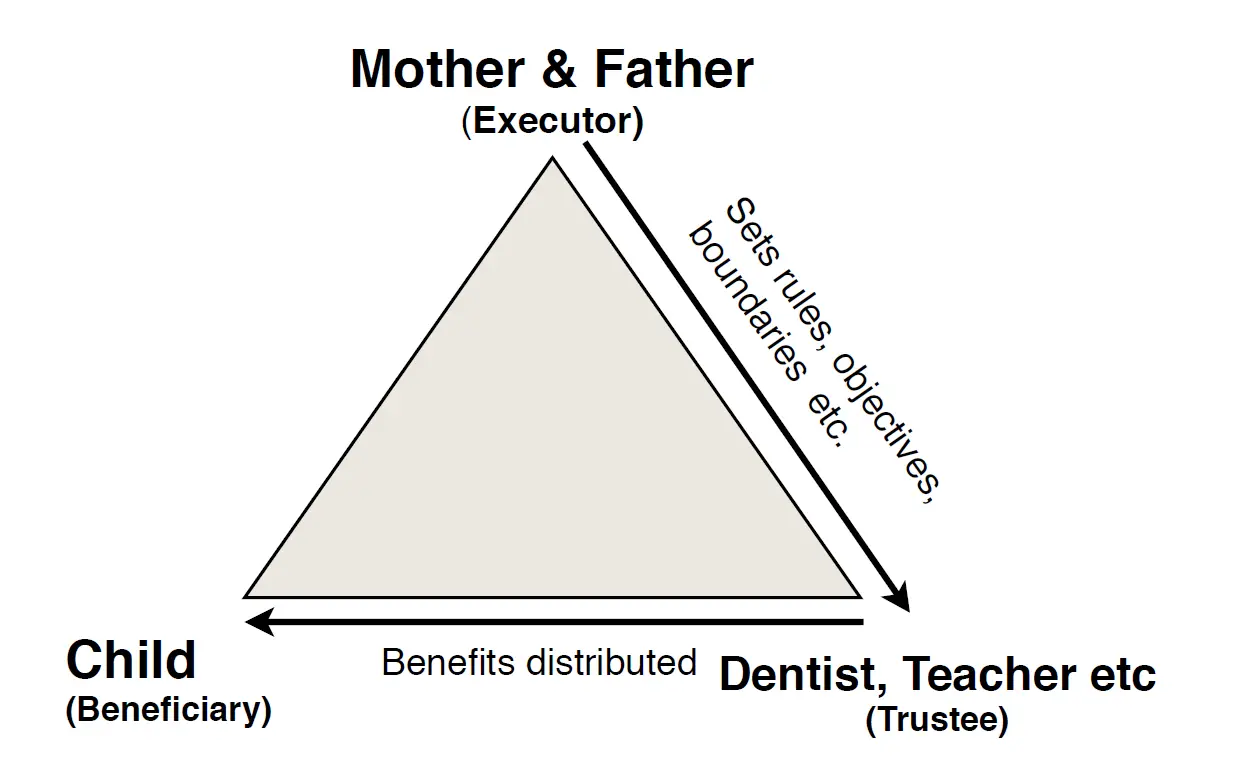
When we become of age (whatever age that is) we take on the role of Executor, and continue to appoint Trustees to return benefits to us as Beneficiaries. This is a global human phenomenon; even the most isolated tribes in the deepest jungles appear to behave in the same way. Let’s call this a Natural Trust.
How Does This Relate To Government?
In the same way we appoint nannies and dentists, we also appoint Government as a Trustee. They perform an administrative service and return benefits to us as Beneficiaries. We enjoy the benefits of roads, schools, public health services etc… or at least that’s how it should work. Most people, I believe, would be comfortable appointing Government as a Trustee – provided Government functions according to this Natural Trust, and more importantly that Government actually serves the people.
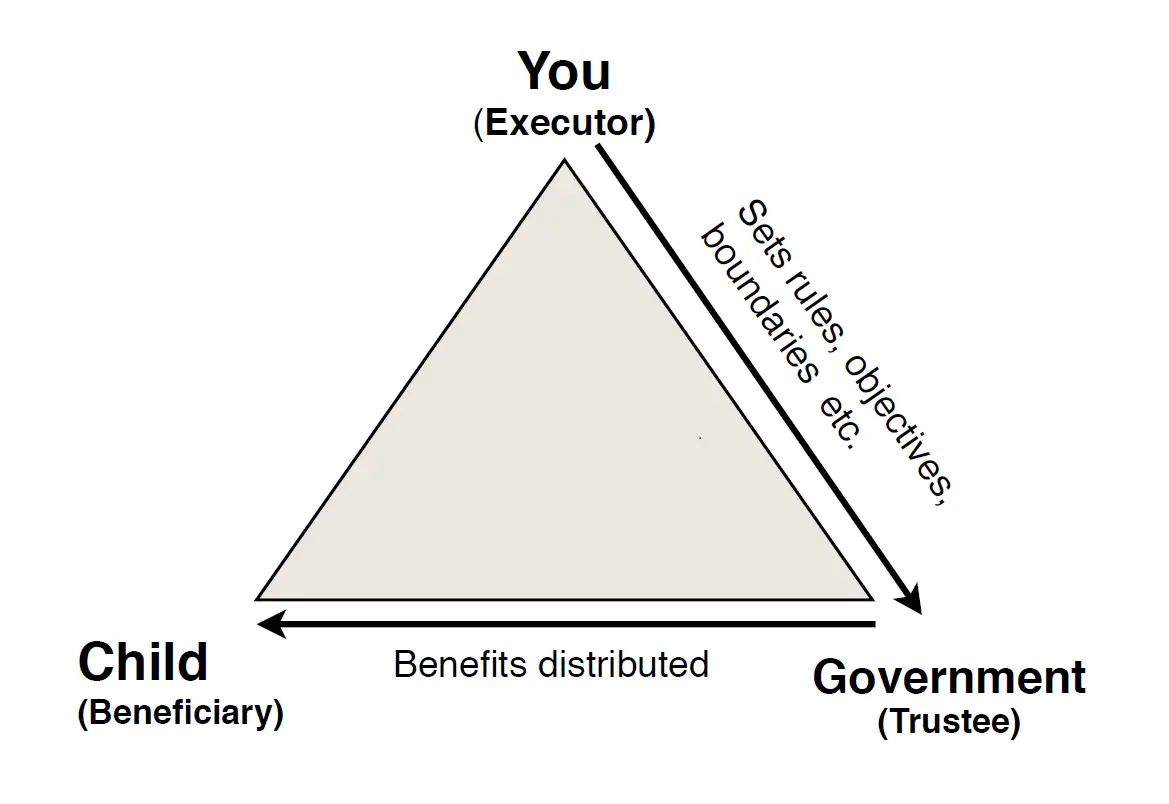
But what if somewhere, something went wrong..?
What if the Government, appointed as Trustee, started serving another master? What if the actions of Government were benefiting others – like shareholders? Would you trust them enough to appoint them your Trustee?
Inconsistencies in the Representation of “Government”
Let’s first look to the United States. The original Constitution reads “The Constitution for the United States”. As of 1871, a Constitution was substituted and reads “The CONSTITUTION OF THE UNITED STATES OF AMERICA”.
So which is it? Which one is legitimate? How many constitutions are there?
A similar scenario appears to be taking place in Australia. The Commonwealth of Australia Constitution Act 1900 (UK) tells us that Government is named “Government of the Commonwealth”.… yet occupying the country’s capital is the “Australian Government”.
Further inconsistency manifests in the name of the Parliament holding office in Australia. The Commonwealth of Australia Constitution Act 1900 (UK) defines Parliament as ”The Parliament” or “The Parliament of the Commonwealth”. This is in direct contrast to the entity called “Parliament of Australia” which is currently occupying the country’s capital.
Surely the Constitutions in both America and Australia aren’t so weak that legal entity names can so easily be substituted? It doesn’t take a constitutional lawyer to tell you there are strict rules for altering constitutions; that’s why we have referenda. But does anyone remember the referenda that enabled these changes to be made?
And is it just the name that’s different..?
Frequently Unanswered Questions.
When such questions are put to “Government”, answers are scarce – if not completely absent. In a recent case study involving the importation of a 1959 Chevrolet Corvette into Australia, “Australian Customs & Border Protection Service” were challenged to provide evidence they were in fact a legitimate Department of the de jure Government of the Commonwealth of Australia. After twelve months of questioning at all levels of Government, no answers have been forthcoming. ”Ministers”, “Judges”, “Commissioners”, “Departments”, “Governors”, and even the Prime Minister - all remain silent.
So who are they? Are they really Government? So far, no “Government” official has been willing to attempt an explanation; to demonstrate their legitimacy as representatives of true government.
But is a government’s refusal to provide evidence of its legitimacy really good enough? Is that what you expect of a Government that is supposed to act as your trustee? What happened to accountability in Government? Should 12 months without answers be taken AS the answer…??
Accountability in Government… in the Words of JFK
So what happened to accountability in government? Surely questions related to the lawful validity of Government are not simply vexatious? Rather, isn’t a “Government” official who declines scrutiny into the lawful validity of their office claiming to be above the law?
In 1961 US President John F Kennedy made a speech to the American Newspaper Publishers Associationthat everyone in Government – and those who believe Government do not have to answer to the people - should listen to.
He stated: “Government at all levels must meet its obligation to provide you with the fullest possible information, outside the narrowest limits of national security…. We intend to accept full responsibility for our errors, and we expect you to point them out when we miss them” said Kennedy. Those are powerful words.
So if this is the case, does real government simply shut up when its validity is challenged? Or does it attempt to address the concerns of those it is supposed to serve, especially as public pressure to do so continues to mount? And if they don’t serve us…. who ARE they serving?? What would happen if the “Government” started to act as the Executor of a trust – dictating rules, codes and statutes to you? What happens if “Government” started demanding that benefits be returned to them..?
How could this happen..?
Corporate “Government” Trust

Let’s consider for a minute the scenario of a Corporate Government Trust, in which the “government” plays the role of Executor. Would a “government” acting as Executor take questions from it’s Trustee? Would the “Government” create a legal entity to which you act as Trustee? Perhaps upon the registration of your birth? Do governments address you … or a LEGAL ENTITY? More importantly, does the silence of government on these questions provide the “fullest possible information” that President Kennedy spoke about??
What can we do about this..?
The first action appears to be to determine the capacity in which “Government” acts. Who are they actually serving..? This question is critical. But I don’t expect this information to be any more forthcoming of government than the answer of their legitimacy. So in the meantime, there are other things we can do in our interactions with Corporate Government.
- Some offer to accept the role of Trustee to their Corporate Government on the condition that they be paid an annual fee to be the Trustee… say $1,000,000 p.a.
- Others provide terms and conditions to their Corporate Government, which set out fees and charges applicable for acts of the pretence to real government.
Either of these two approaches would collapse if those claiming government status were able to demonstrate their legitimacy. But these actions have been shown to stop Corporate Government agencies in their tracks. Does this sound like the actions of a Trustee of the people? Or an Executor and Beneficiary of a corrupted system?
More importantly, how many challenges to the lawful validity of government have been met with the proof demanded by its people?
So what the FUQ do we do next?
- In dealings with any government representative, ask them ONE SIMPLE QUESTION: Can you please demonstrate that today’s government (the one you represent) is the same one as established at the inception of this country? It is the onus of any person or entity claiming government status to prove they act on behalf of legitimate government. Until they can demonstrate this, don’t deal with them.
- Sign the petition to ask Her Majesty, The Queen for the truth about the “Australian Government”; something all levels of the “Australian Government” have been unwilling or unable to provide.
- Share this article. The Corporate Government phenomenon is not limited just to the United States, the UK, or Australia. Increasingly, Governments around the world are behaving as Executors and Beneficiaries, not as Trustees of their people. We all have a right to know… which “Government” can we trust?
About the Author:
Scott spent 12 years working aboard luxury mega yachts for some of the richest and fussiest people on the planet. His travels took him throughout the Mediterranean, Caribbean with voyages through the Indian and Pacific Oceans and islands. Encountering Customs and Immigration formalities was commonplace as Captain. More recently Scott has worked in mining relying on his degree in project management.
With a keen eye for detail Scott has observed inconsistencies in “Government” and contributes this article from his findings.
Visit Scott’s website for more information - truth-now.net
Join Wake Up World's Ever Evolving Social Communities
Subscribe to:
Posts (Atom)